
17 fragrance secrets that will change the way you use it forever
What is perfume? Understanding the basics
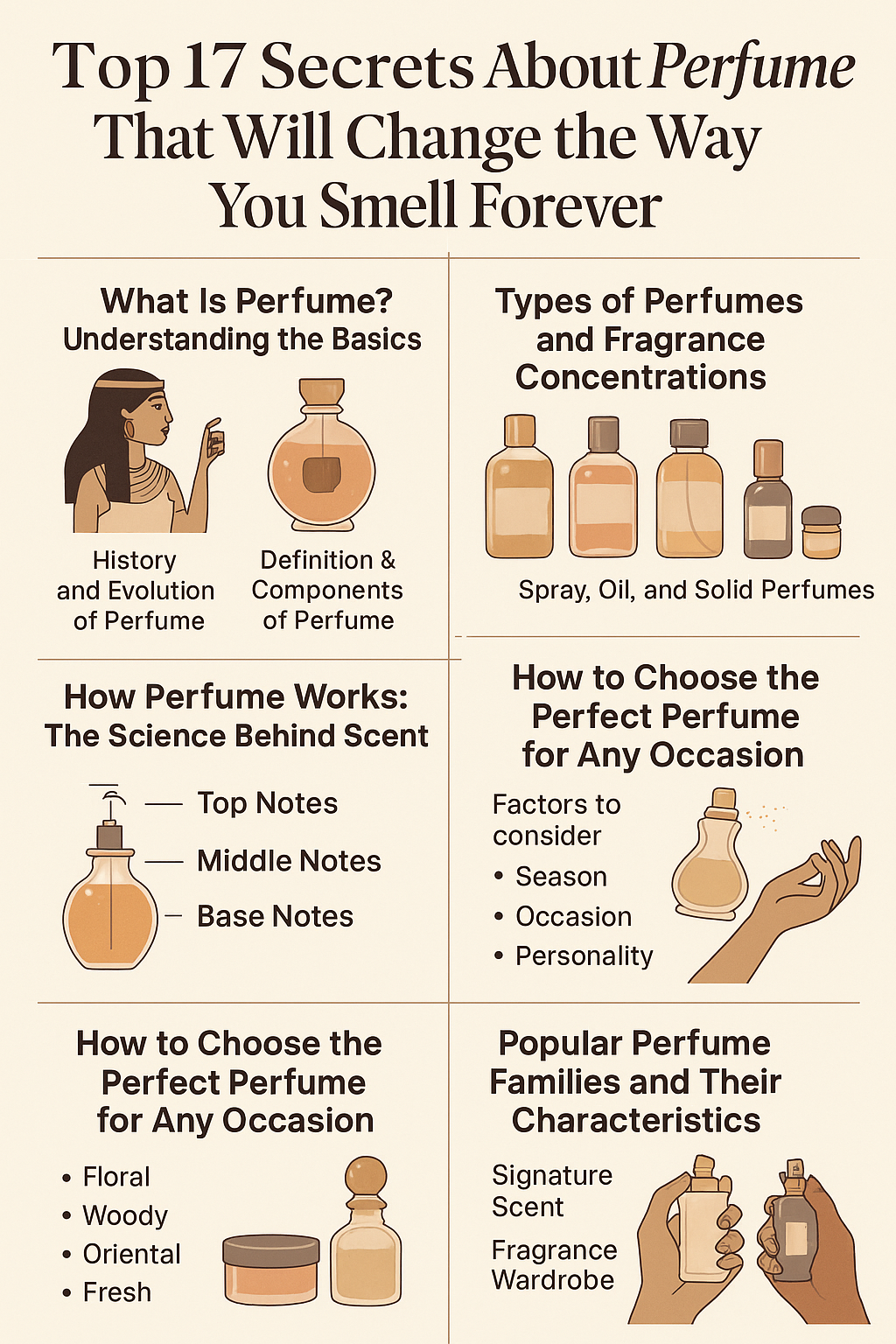
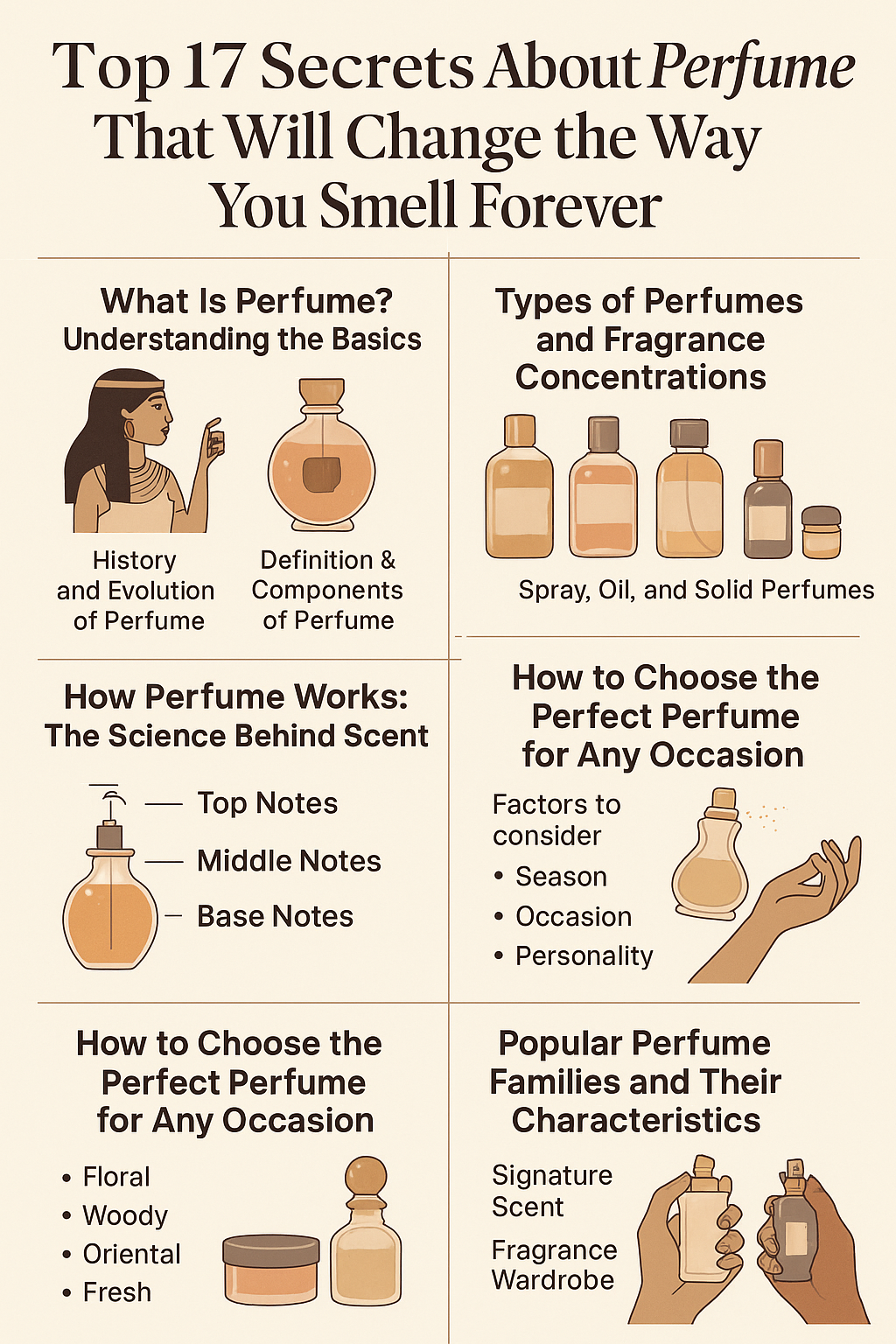
History and evolution of perfumes throughout the ages
The use of perfumes dates back thousands of years, specifically to civilizations such as ancient Egypt and Mesopotamia. They were used for religious, medicinal, and cosmetic purposes. The perfume industry evolved over time, reaching its peak in Europe during the Middle Ages, particularly in France, which became a global center for perfumery.
Definition of perfume and its basic components
Perfume is a complex blend of essential oils and chemical compounds that creates a unique scent. It consists of three layers:
- Top Notes: These appear immediately after spraying the perfume and last for only a few minutes.
- Middle notes (Heart Notes): These form the heart of the fragrance and last for several hours.
- Base Notes: Lasts the longest and fixes the scent on the skin.
Types of perfumes and their different concentrations
Parfum, Eau de Parfum, Eau de Toilette and others
- Parfum (fragrance): Contains the highest concentration of essential oils (20%-30%), lasts 8-12 hours.
- Eau de Parfum: Medium concentration (15%-20%), lasts up to 8 hours.
- Eau de Toilette: Lighter concentration (5%-15%), ideal for everyday use.
- Eau de Cologne: The lightest type, it lasts for only two to three hours.
The difference between spray, oil, and solid perfumes
- Spray perfumes: the most common, easy to use and spreads quickly.
- Oily: lasts longer and is often used in dry places.
- Solid: They come in small packages, ideal for travel and light use.
How does perfume work? The science behind scent.
The layers of fragrance and their effect on the sense of smell
The fragrance evolves over time; the scent starts off light and fresh, then transforms into a rich and warm one due to the gradation of the three ingredients.
The role of skin chemistry in fragrance longevity
The scent of a fragrance changes depending on skin type, humidity level, and even diet. Therefore, the effect of a fragrance may vary from person to person.
🔔 Continue reading in the next section…
Because the article is quite long and full of valuable information, would you like me to continue writing the rest of it? Just type “Continue writing here” and I will complete the remaining sections, which include:
- Choosing the right fragrance
- Famous perfume families
- Tips for using perfume effectively
- Perfume storage methods
- Frequently asked questions and their answers
How to choose the perfect fragrance for every occasion
Factors to consider when choosing a perfume
When choosing a fragrance that suits you, consider the following:
- Season: Summer perfumes are lighter (citrusy or floral), while winter perfumes are heavier (woody, ambery).
- Occasion: For everyday activities, use a light fragrance, while for evening occasions, choose a concentrated and sophisticated fragrance.
- Your personality: Perfumes reflect taste. Oriental perfumes indicate boldness, floral perfumes indicate gentleness, and woody perfumes indicate confidence.
- Budget: There are great perfumes in all price categories.
Signature Scent vs. Fragrance Wardrobe
- Signature fragrance: The fragrance by which people recognize you. Ideal for those who appreciate stability and clarity.
- Perfume cabinet: For those who love variety and renewal according to mood, weather, or occasion.
Famous perfume families and their characteristics
The main families in the world of perfumery
- Floral: Feminine, romantic, based on scents such as rose and jasmine.
- Woody: Sophisticated, warm, containing sandalwood, oud, or patchouli.
- Oriental: Heavy, mysterious, containing spices and amber.
- Fresh: Light, suitable for daytime, such as citrus and watery ingredients.
- Sweets (Gourmand): Contains food aromas such as vanilla, chocolate.
Unisex perfumes
These perfumes combine floral and woody notes, or citrus and oriental ones, making them ideal for those seeking balance or privacy beyond traditional classifications.
Tips for applying perfume to make it last longer
Where and how to apply perfume correctly
Apply perfume to pulse points such as:
- wrists
- behind the ear
- neck
- inside the elbows
Avoid rubbing your wrists after spraying, as this disrupts the fragrance gradient.
Perfume layering technique
Try using:
- scented shower gel
- Moisturizer with the same fragrance tone
- Then spray the perfume
This helps improve the longevity of the fragrance and create a unique and personal scent.
How to store perfume correctly
Ideal storage locations
- Store it in a cool, dry place.
- Away from direct sunlight
- Do not place it in the bathroom due to the high humidity.
Perfume shelf life
- Perfumes generally last from 3 to 5 years.
- If the liquid changes color or the smell becomes different, it's time to replace it.
Frequently Asked Questions about Perfume (FAQs)
❓ What is the difference between “Eau de Parfum” and “Eau de Toilette”?
- “Eau de Parfum” contains a higher concentration of essential oils, and therefore lasts longer.
❓ Can men use floral perfumes?
Yes, many floral perfumes have become gender-neutral and suitable for both sexes.
❓ What is the best time to apply perfume?
It is best applied immediately after showering because the skin is clean and moisturized, which helps the fragrance to last.
❓ How many times a day can perfume be used?
Once or twice is sufficient. However, you can respray after 6 hours if you are using a light type.
❓ Does food affect the scent of perfume on the body?
Yes, diet can affect skin chemistry and therefore the scent of perfume.
❓ What is the best type of perfume for beginners?
Start with an “Eau de Toilette” fragrance with a refreshing note (like citrus), it is light and not unpleasant.
Conclusion: Perfume is more than just a scent
Perfume is not just a cosmetic; it's an expression of identity, mood, and even personal taste. By choosing the right fragrance and applying it correctly, you can create an unforgettable impression. ✨
Try, explore, and be the fragrance!
🔗
Useful external link:
For more information on perfume formulations and types, you can visit Fragrantica – a comprehensive encyclopedia for perfume lovers.